Tips ·
How to choose your first surfboard: a guide for beginners
Softboard, mini-malibu or shortboard? How to choose a first surfboard, what size and volume to look for, when to change, and mistakes to avoid before you buy.
Choosing your first surfboard is one of the most exciting steps when you start surfing. It is also where many beginners make the most expensive mistake: buying a board that looks good and is too difficult. The wrong surfboard slows your progress and costs you waves. The right surfboard helps you catch more waves, fall less and have more fun.
What changes from one surfboard to another
Three factors decide how a surfboard behaves:
- Volume (litres): more volume means more float, more stability and an easier time paddling and catching waves.
- Length and width: longer, wider surfboards paddle better. Short, thin surfboards are more responsive, but more demanding.
- Rocker (curve): less curve glides better on small waves.
As a rule: the less experience you have, the more volume, length and stability you want.
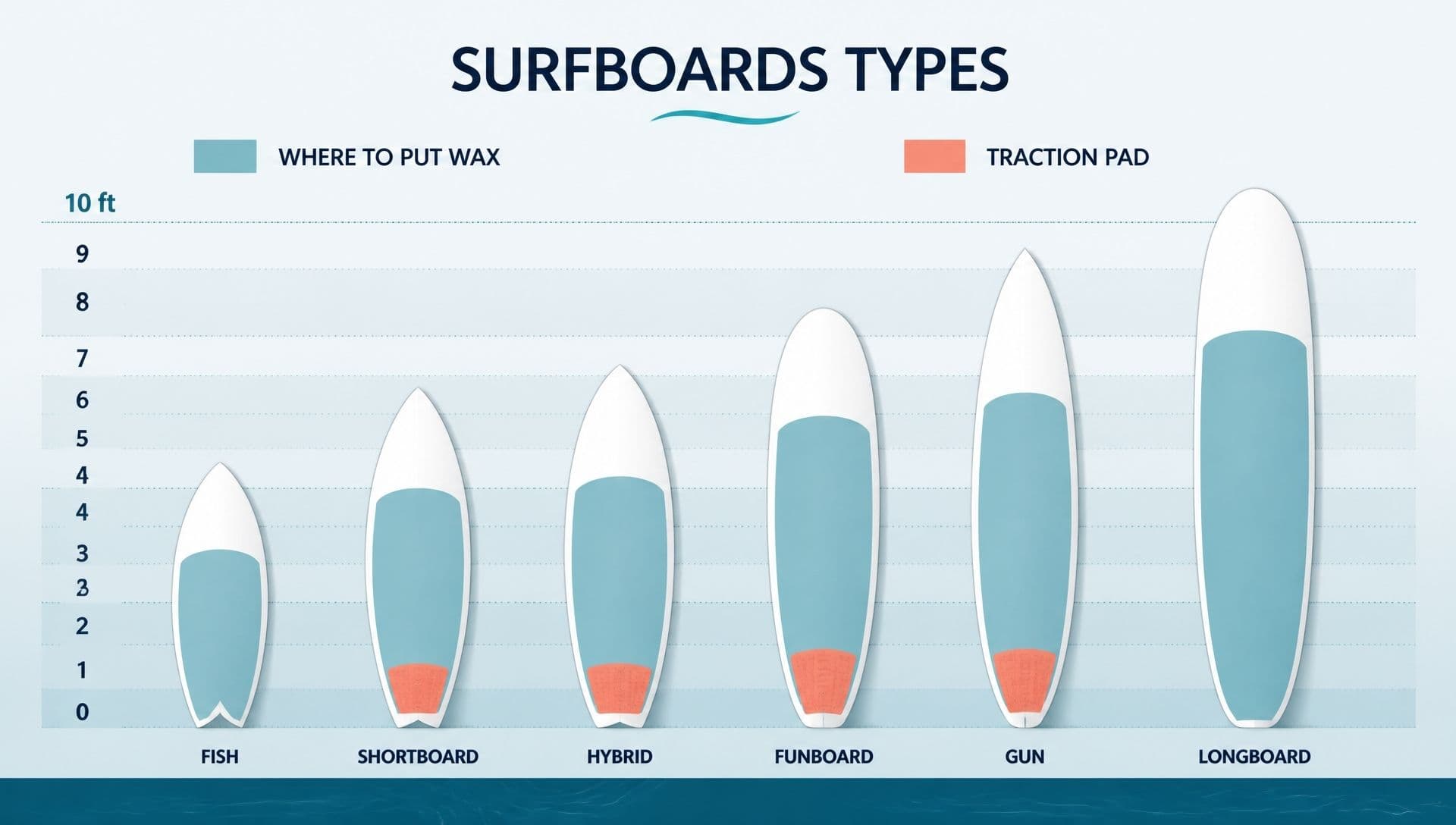
The types of surfboard to start on
Softboard (foam surfboard)
The first choice for your first lessons. The surface is soft, it is safer when you fall, and it is very stable. All of our lessons use softboards. It is ideal for learning to paddle, to stand up and to find your balance.
Mini-malibu or progression surfboard
This is already a fibreglass or epoxy surfboard, but with good volume and length. It is the usual choice for someone who already surfs with some independence and wants to progress without too big a jump.
Funboard and longboard
Long and stable, they catch small waves very easily. Excellent for a classic style and for days when the sea is smaller.
Shortboard
Short, thin and responsive: it allows more radical manoeuvres, but it demands a good paddle, timing and level. It is not a surfboard for beginners.
How to know you are ready to change
You can think about changing surfboard when:
- You catch waves consistently and you already stand up with confidence.
- You can control your direction and start making simple turns.
- You feel that your current surfboard limits you on larger waves.
If you are unsure, ask your coach. Many surfers move on too early and end up stalling.
Common mistakes to avoid
- Buying a surfboard that is too short because it is fashionable, or because you are copying the professionals.
- Buying without trying one. If you can, test several models before you invest.
- Ignoring your weight and your fitness. The right volume depends on both.
- Forgetting the rest of the equipment: leash, deck grip or wax, fins, a board bag and a good wetsuit (see the right thickness).
- Starting with the equipment instead of the technique. No surfboard replaces lessons and hours in the water.
A new surfboard or a second-hand one?
A second-hand surfboard is a good way to start, as long as you check:
- Cracks or soft patches in the hull
- Yellowed areas with moisture
- The state of the fin boxes
- Poorly done repairs
If you do not have experience judging this, take someone who does.
Frequently asked questions
Which surfboard should I use in my first lessons?
A softboard, like the ones we use at Origem Surf School.
What size of surfboard should I choose?
It depends on your height, weight and level, but to start, always look for a surfboard that is long, wide and high in volume.
Should I buy a surfboard before taking lessons?
No. Take a few lessons first, so you understand your level and what you need.
Still deciding?
Talk to our coaches: we can advise you based on how you are progressing. Book a lesson or see our surf training if you want to progress with video analysis.
Read next: What to bring to your first surf lesson.
Share