Tips ·
Wetsuits: which thickness to wear in Portugal each season
3/2, 4/3 or 5/4? The right wetsuit thickness for each month on the Lisbon coast, how it should fit, what to buy first, and how to care for it.

The wetsuit is, after the surfboard, the most important piece of equipment for surfing in Portugal. Atlantic water rarely goes above 20°C and, in winter, sits around 14°C. Without a suitable wetsuit, the session ends after twenty minutes, shivering. With the right wetsuit, you can surf all year in complete comfort. In this guide we explain what the numbers mean, which thickness to wear in each season on the Lisbon coast, and how to choose a wetsuit that lasts.
What the numbers 3/2, 4/3 and 5/4 mean
The thickness of a wetsuit is given in millimetres, with two numbers. The first is the thickness on the torso, where you need more warmth; the second, on the arms and legs, where you need more mobility. A 3/2 wetsuit has 3 mm on the torso and 2 mm on the limbs. A 4/3 has 4 and 3. A 5/4 is for very cold water, which in mainland Portugal is only justified in the North, in the middle of winter.
Besides the thickness, wetsuits differ by cut: fullsuit (long sleeves and long legs), shorty (short sleeves and short legs) or long john (sleeveless). And by the zip: on the back (easier to put on), on the chest (warmer, less water gets in) or with no zip.
Which thickness to wear in each season on the Lisbon coast
These are the values we use in our lessons, based on the average water temperature in Cascais, Carcavelos and Sintra:
- December to March (14 to 15°C): a 4/3 mm fullsuit. On days with a cold wind, 3 mm boots and, for anyone who feels the cold in their ears, a hood.
- April and May (15 to 17°C): a 4/3 on the early days, a full 3/2 when the water goes above 16°C.
- June to September (18 to 20°C): a full 3/2 early in the morning, a shorty or a 2/2 on warm afternoons. Many experienced surfers wear only Lycra in August, but for a two-hour lesson we always recommend neoprene.
- October and November (17 to 15°C): a full 3/2 until mid-October, a 4/3 from then on.
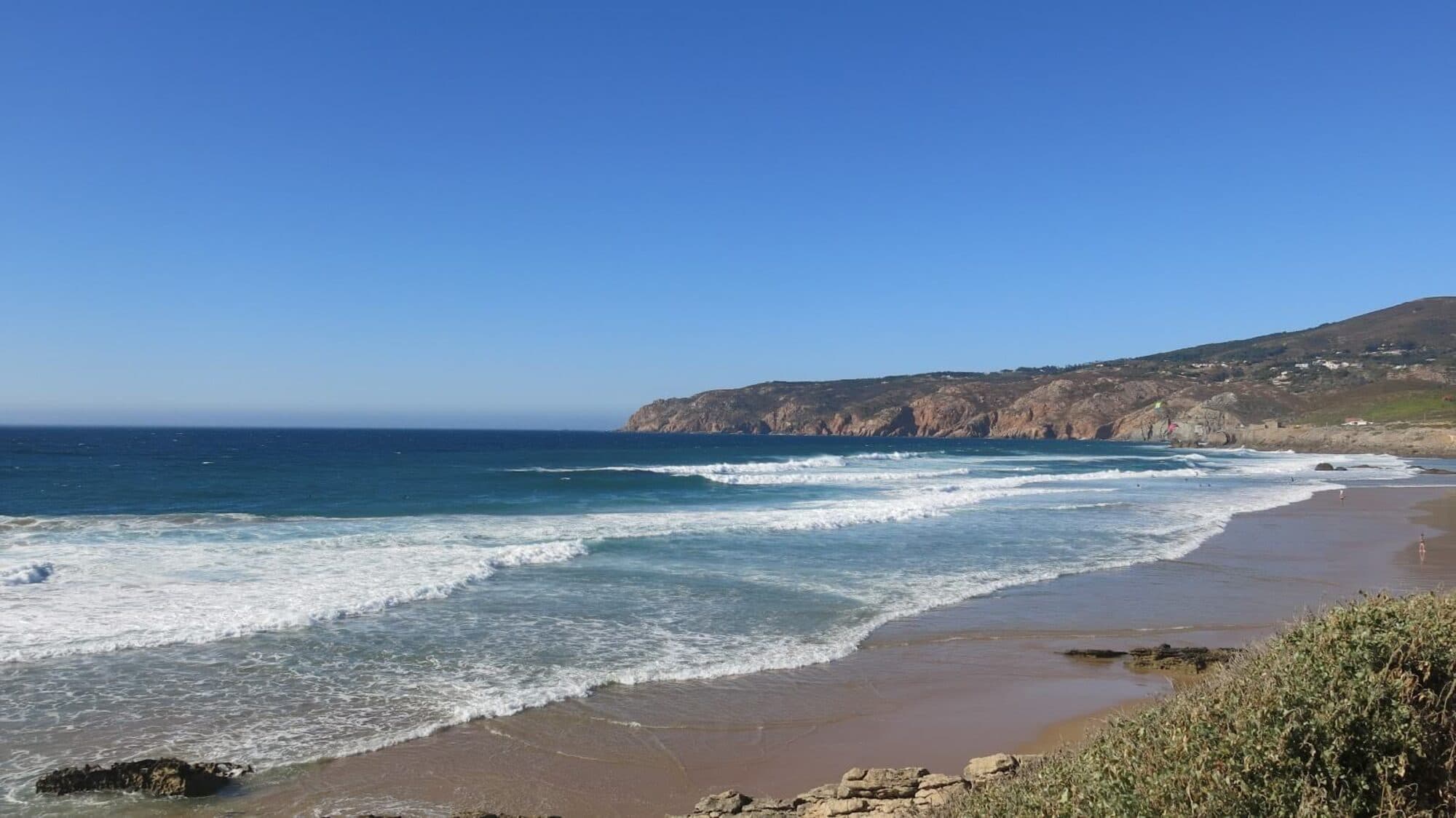
A note on Guincho: because of coastal upwelling, the water can be 3 to 4°C colder than on the Linha do Estoril on the same day. At Guincho, even in summer, a full 3/2 is the safe choice.
How a wetsuit should fit
The rule is one: snug, without being tight. Neoprene keeps you warm because it holds a thin layer of water between the wetsuit and the skin, which the body heats. If the wetsuit is loose, that water is replaced with every wave and the heat is lost. If it is too tight, it limits paddling and breathing. Signs of a well-fitted wetsuit:
- There are no folds of loose neoprene on the back, in the armpits or behind the knees.
- You can lift your arms above your head without the wetsuit pulling at the neck.
- The neck is snug but you can fit a finger between the wetsuit and the skin.
- The sleeves and the legs reach the wrists and the ankles without rolling up.
In our lessons the wetsuit is included and we have every size, from child to adult. It is the best way to try thicknesses and cuts before you buy your own.
Buying your first wetsuit: what is worth spending money on
If you are going to surf regularly, the first wetsuit should be a full 4/3: it covers October to May, which are the months with the most waves, and cold summer mornings. A good mid-range wetsuit, with glued and blindstitched seams (known as GBS) and a thermal lining on the chest, costs between 150 and 250 euros and lasts three to five years with care. Cheaper wetsuits, with stitched seams (flatlock), let water in and are for summer only.
The second wetsuit, later, will be a 3/2 or a shorty for the warm months. Do not buy a shorty as your first wetsuit: you will use it two months a year.
How to look after a wetsuit so it lasts
- Rinse it in fresh water after every session. Salt hardens the neoprene and destroys the seams.
- Dry it in the shade, inside out first, hung by the waist on a wide hanger. Direct sun and thin hangers warp the shoulders.
- Never use a washing machine or detergents. If it smells, there are soaps made for neoprene.
- Put it on with care: nails and watches tear the neoprene. Pull by the folds, not by the ends.
- Do not leave it in the car in the sun. That is the fastest way to ruin it.
Accessories that make a difference in winter
Boots of 3 mm keep the feet warm and protect them from rocks. A hood or cap reduces heat loss through the head and protects the ears from cold water, one of the causes of what is called "surfer's ear". Gloves only on the coldest days; they reduce sensitivity when you paddle. And a poncho for changing on the beach, which is not a wetsuit accessory, but it should be mandatory.
Frequently asked questions
Do I need to buy a wetsuit for the first lesson?
No. In all our lessons the wetsuit is included, with the right thickness for the time of year.
Which wetsuit for surfing in Portugal in summer?
A full 3/2 in the morning and a shorty or a 2/2 in the afternoon, when the water reaches 19 or 20°C. At Guincho, always a 3/2.
Is a 4/3 too warm for September?
In September the water is at its warmest of the year. A 4/3 is bearable in the morning, but a 3/2 is more comfortable. From mid-October the 4/3 is the choice again.
Still unsure? Talk to us on the contact page or try one at your next lesson.
Share