Tips ·
The surf take-off: 5 common mistakes and how to fix them
Cannot stand up on the surfboard? The 5 most common take-off mistakes, and exercises to fix them on the sand and in the water, so you catch more waves.
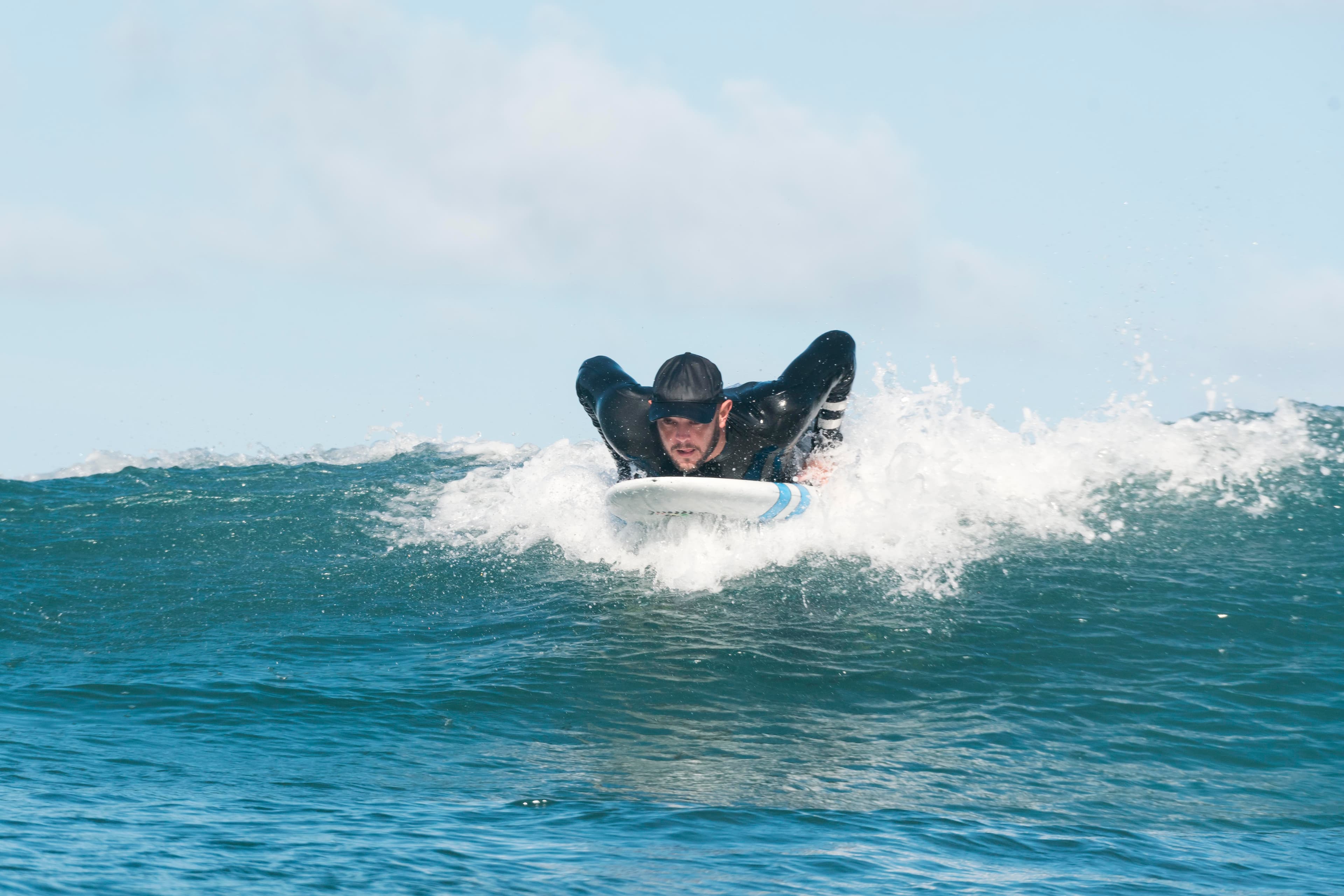
The take-off, or pop-up, is the movement from lying down to standing on the surfboard. For beginners it is the most important moment in surfing, and also the most frustrating. The good news: almost every problem is solved by correcting a few simple mistakes.
The movement, in short
- You paddle hard until the wave catches you.
- You place your hands on the deck, at chest height.
- You push and lift your torso, and at the same time you bring your feet underneath your body.
- You land with your feet in a surfing stance, knees bent and your eyes looking forward.
It all happens in seconds. That is why small mistakes make all the difference.
Mistake 1: not paddling enough
Many beginners try to stand up before the surfboard is travelling with the wave. The result: the wave passes and you are left behind. What to do: paddle with more conviction on the last strokes, and only stand up when you feel the surfboard being "pulled" by the wave.
Mistake 2: looking at your feet
You go where you look. If you look down, your body tips and you fall. What to do: look ahead, to where you want to go, and keep your head up through the whole movement.
Mistake 3: going through your knees
Kneeling before you stand feels safer, but it makes the movement slow and unbalanced.
What to do: practise the pop-up in two quick, fluid beats, first on the sand and then in the water, until you can do it without thinking.
Mistake 4: hands and feet in the wrong place
Hands too far forward, too far back, or crossed feet are frequent causes of falls. What to do: hands beside your chest, shoulders in line, feet shoulder-width apart or a little wider. Find out whether you are regular (left foot forward) or goofy (right foot forward) and always keep the same stance.
Mistake 5: standing up too tall and too stiff
Standing with straight legs takes your stability away. What to do: bent knees, a low torso and your weight spread out. Think of "sitting" slightly, as if you were going into a squat.
Exercises to practise at home
- Pop-up on the sand or on the floor: 3 sets of 10 repetitions, focusing on fluidity.
- Explosive press-ups: they strengthen the chest, shoulders and arms for the push.
- Squats and lunges: they give your legs strength and stability.
- Shoulder and hip mobility: flexibility helps you place your feet correctly.
There is a full plan in our article on physical preparation for surfing.
How feedback speeds up progress
Having someone watch you from outside is the fastest way to see what you are doing wrong. In our surf training we use video analysis so you can see your mistakes in slow motion and correct them with the coach.
Frequently asked questions
Why do I always fall when I stand up?
It is usually because you paddle too little, look down, or place your feet badly. Identify which one it is and correct one mistake at a time.
How long does it take to learn the take-off?
It varies a lot. With practice and good lessons, many people manage to stand up within a few sessions.
Should I practise at home?
Yes. Practising the movement on land helps a lot with building muscle memory.
Shall we work on your take-off?
Book a lesson and take your take-off to the next level.
Read next: How to choose your first surfboard.
Share