Tips ·
Physical preparation for surfing: exercises to surf better
Paddling, take-off, core, legs, mobility, skateboarding and breathing: a weekly plan of 30 minutes a day to catch more waves and avoid injury.
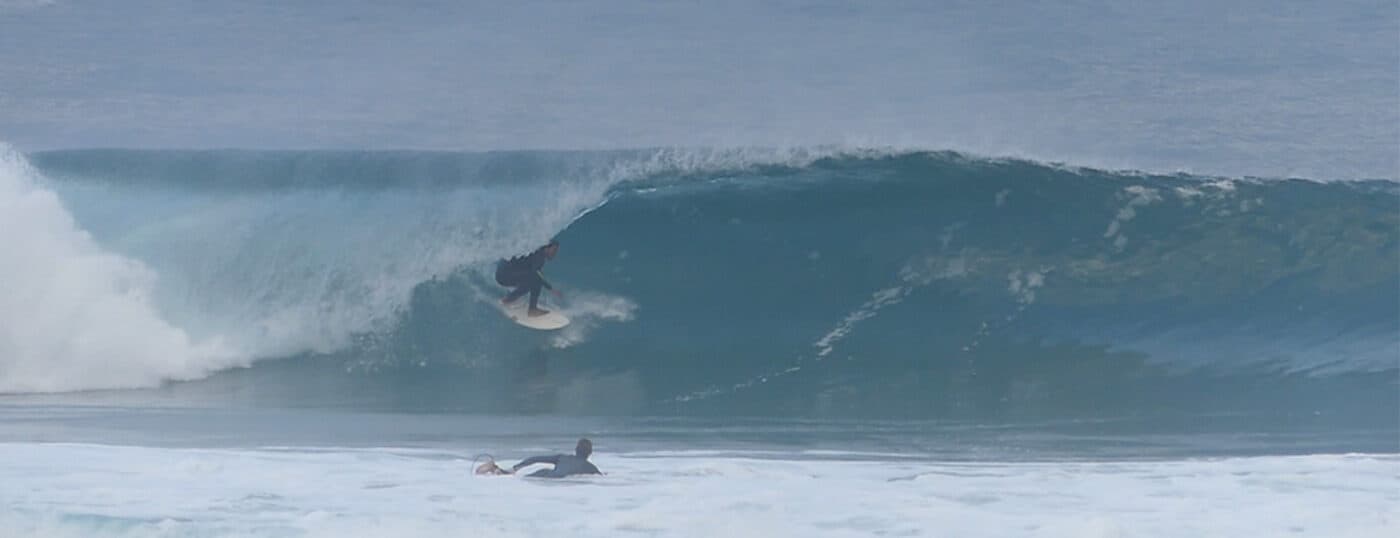
There is a line we repeat in our surf training: "surfing is done out of the water". In a two-hour session, a surfer spends only a few minutes actually riding waves. The rest is paddling, waiting, diving under waves and paddling again. If you arrive at the sea in good shape, you catch more waves, you progress faster and you get injured less. In this article we present a simple physical preparation plan for surfing, which you can do at home or in the gym, with no special equipment.
What surfing asks of the body
Before you train, it helps to understand what surfing demands:
- Paddling endurance. Shoulders, back and triceps work for the whole session. This is the main cause of tiredness in beginners.
- Explosiveness in the take-off. Getting from lying down to standing in less than a second takes strength in the chest, the arms and the core, and mobility in the hips.
- Core stability. All the steering of the surfboard passes through the centre of the body. A strong core holds your balance in manoeuvres and protects the lower back.
- Leg strength. Manoeuvres are made with a deep bend of the knees and rotation of the hips.
- Lung capacity. Staying underwater after a fall, without panicking, is something you can train.
- Mobility. Stiff shoulders and hips limit your paddling and your take-off, and they are the source of most injuries.
Paddle training: the most important, and the most forgotten
If you do only one thing, do this: swim. Twenty to thirty minutes of swimming, twice a week, will transform your paddling. Front crawl is the closest stroke. If you do not have a pool, the exercises that best simulate paddling are pull-ups, rows with a resistance band, and shoulder raises lying face down, lifting your arms into a "Y" and a "T". Do 3 sets of 12 to 15 repetitions.
Take-off: repeat on land what you want to do in the water
The take-off is a technical movement, and technique is trained by repetition. Lie face down on the floor, hands by your chest, and stand up into your surfing stance in one movement, without putting your knees down. Do 3 sets of 10, slowly, with your attention on the front foot, which should land between your hands. Add push-ups (3 sets of 10 to 15) and burpees (3 sets of 8) to build the explosiveness you need. This is exactly what we work on in the first lessons on the sand.
Core: the base of everything
Forget traditional sit-ups. Surfing needs a core that resists rotation and instability. The best exercises are the plank (3 sets of 40 to 60 seconds), the side plank (3 sets of 30 seconds on each side), the bird-dog (on all fours, extend the opposite arm and leg, 3 sets of 10 per side) and a rotation with a band or with a light weight (3 sets of 12 per side). A balance ball, or simply an unstable cushion, adds the imbalance that the sea imposes.
Legs: squats and lunges
Deep squats (3 sets of 15), lateral lunges (3 sets of 10 per side) and jumps onto a box or a step (3 sets of 8) prepare the legs for the low stance and for manoeuvres. Always work with your weight on your heels and your knee in line with your foot.
Mobility: ten minutes that prevent injury
Do this every day, preferably in the morning or before you get into the water:
- Shoulder circles and cat-camel for the spine (1 minute each).
- Hip opener: from a push-up position, bring one foot up beside your hand and rotate your torso upwards (10 per side).
- Downward-facing dog and cobra, alternating (10 repetitions). It is the take-off in slow motion.
- Chest stretch in a door frame (30 seconds).
Skateboarding: the best surf training out of the water
It is no accident that our surf training includes skateboarding. A surfskate, a skateboard with a front axle that turns, reproduces the feeling of a turn in surfing and trains rotation of the shoulders and hips, weight through the feet, and reading lines. Half an hour in a bowl or on a gentle ramp is worth many waves. Start slowly and wear a helmet.
Breathing and breath-holding
After a fall on a larger wave, the difference between calm and panic is your breathing. Train it at home, sitting down: breathe in for four counts, hold for four, breathe out for eight. Five minutes a day lowers your resting heart rate and increases your tolerance to carbon dioxide. Never practise breath-holding in the water on your own.
A weekly plan for people who surf at the weekend
- Monday: 30 minutes of swimming, or rows with a band, plus mobility.
- Tuesday: core and legs (plank, squats, lunges, jumps).
- Wednesday: active rest, a walk, mobility.
- Thursday: take-offs, push-ups, burpees, rows.
- Friday: 30 minutes of skateboarding, or swimming, and mobility.
- Saturday and Sunday: surf.
Each session lasts 30 to 40 minutes. After a month you will notice that you paddle further, stand up faster and finish the session with energy. What you eat matters too: read our article on nutrition in surfing.
Frequently asked questions
Do I need to be fit for the first lesson?
No. The beginner lesson adapts to any level of fitness. The plan in this article is for people who already surf and want to progress.
How long until I notice a difference?
Three to four weeks of regular training are enough to feel a stronger paddle and a faster take-off.
Does performance training include physical preparation?
Yes. In surf training we combine sessions in the sea with video analysis, physical training, skateboarding and pool work, with an individual plan for each athlete. Book an assessment and start training seriously.
Share